Agency Open Records Officer Guidebook

The Office of Open Records website (which, by the way, is scheduled to get a much-improved look and feel tomorrow!) includes numerous guides about the Right-to-Know Law for both requesters and agencies.

The newest — and most comprehensive — of these is our new Agency Open Records Officer Guidebook (PDF).

The AORO Guidebook, 79 pages in total (with a variety of sample forms agencies can use as templates), is designed to provide a general overview of the RTKL process from an agency perspective. We tried to write it to be helpful for both new and veteran AOROs.

If you have any comments or suggestions, please post them here or tweet to @ErikOpenRecords or @OpenRecordsPA. You can also email us at openrecords@pa.gov.

Public Business and Private Email

A recent article at Pennlive.com — “Should state workers conduct public business using private email accounts?” — tackled a very timely issue.

It’s an important article. When public officials are discovered to have used private email accounts to conduct government business, it can erode public trust. However, at least in Pennsylvania, it does not remove those emails from potential public review.

Pennsylvania’s Right-to-Know Law, as I told the article’s author, Jan Murphy, “very purposely does not distinguish between agency business that’s done on agency computers versus agency business done on a personal device.”

In other words, the RTKL was written to ensure that public records could not be kept out of the public sphere simply by using a personal email account.

Public officials should use official government email accounts — that’s clearly the best practice, and it should be the standard.

But if, for any reason, government business is conducted on personal devices, the RTKL covers those records in the same way it covers government business conducted on government devices.

Podcast: Senator Dominic Pileggi

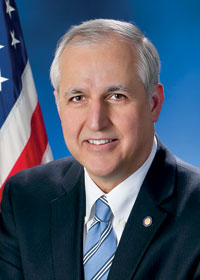
SenPileggiWebSmOn the new Open Records in Pennsylvania podcast, I interviewed Senator Dominic Pileggi, the author of Pennsylvania’s current Right-to-Know Law.

Senator Pileggi and I talked about how he thinks the law has worked since being enacted in early 2008, his thoughts on possible amendments (including Senate Bill 411), and more.

Subscribe:
Open Records in Pennsylvania podcast on iTunes

Listen:

Podcast Logo CroppedDownload:
Episode 2 of the Open Records in Pennsylvania podcast

If there’s something you’d like to hear on a future episode, let me know. Share your thoughts in the comments below, tweet to @ErikOpenRecords or @OpenRecordsPA, or send an email to openrecords (at) pa (dot) gov.

Theme music by Pennsylvania’s own John Austin.

Photographing Public Records

On Aug. 14, the Office of Open Records issued a decision — Muenz v. Township of Reserve — which holds that requesters can photograph public records which they asked to inspect.

Following is the entire relevant section of the Muenz Final Determination (FD):

***

The Requester argues that the Township did not permit photographs of responsive records to be taken. Specifically, the Requester asserts that while inspecting the requested records, upon attempting to photograph documents, he was informed by the Township police chief that he would be permitted to pay for copies of the records but that he would not be able to take photographs. The Township does not dispute these facts and argues that there is no provision in the RTKL that requires the Township to permit the Requester to photograph of records.

Section 701(a) of the RTKL requires that public records be accessible for inspection and duplication. 65 P.S. § 67.701(a). Agencies, under the RTKL, may adopt “regulations and policies necessary for … [agencies] to implement” the RTKL. See 65 P.S. § 67.504(a). In Gries v. Philadelphia City License Marriage Bureau, the OOR upheld an agency’s policy of prohibiting requesters from photographing copies of records where the agency’s fee policy was governed by a statute other than the RTKL. OOR Dkt. AP 2009-0552, 2009 PA O.O.R.D. LEXIS 660. In Wright v. Department of Corrections, the OOR held that, pursuant to an agreement between a requester and an agency, the agency was required to allow the requester “to bring his own copier or scanner.” OOR Dkt. AP 2009-0174, 2009 PA O.O.R.D. LEXIS 608.

This matter is distinguishable from Gries in that here there is no evidence that the Township is permitted by statute to impose a fee schedule separate than that set by the OOR. See 65 P.S. § 67.1307(g) (“Except as otherwise provided by statute, no other fees may be imposed unless the agency necessarily incurs costs for complying with the request, and such fees must be reasonable.”) In Gries, a separate statute set the fee schedule for the agency, in addition to authorizing the agency to set fees not expressly provided for by statute. As part of its statutory obligations, the agency adopted a policy prohibiting the use of photography.

Section 1307 of the RTKL addresses duplication, providing that “[a]n agency may waive fees for duplication of a record, including, but not limited to, when: … the requester duplicates the record[.]” 65 P.S. § 67.1307(f)(1). Therefore, the RTKL contemplates situations in which requesters themselves duplicate records, rather than seeking duplication by the agency. Photographing a document is a form of duplication and, therefore, is permissible under the RTKL. Allowing an agency which lacks separate statutory authority to set a fee schedule prohibiting the photographing of documents would be contrary to the purpose of the RTKL, which is “to maximize access to government records.” See Gingrich v. Pa. Game Comm’n, No. 1254 C.D. 2011, 2012 Pa. Commw. Unpub. LEXIS 38 at *16 (Pa. Commw. Ct. 2012). To hold otherwise would not only permit agencies to allow the public to inspect public records, but would also, following the reasoning to its logical conclusion, permit agencies to prohibit the public from taking written notes about public records or recording an audio dictation describing public records. Such an interpretation of the RTKL would lead to an absurd and unreasonable result, and cannot be said to have been the intention of the General Assembly. See 1 Pa.C.S. §1922. Therefore, under Section 701(a) of the RTKL, the Township must make responsive records available to the Requester for his inspection and duplication by photography.

***

Here’s the bottom line:

Under the Right-to-Know Law, agencies cannot charge requesters who wish to use their own equipment, such as a smartphone, to photograph public records which they asked to inspect.

Note: Because the OOR’s FD granted in part and denied in part, either party can appeal this decision to the Allegheny County Court of Common Pleas within 30 days.
Open Records in Pennsylvania: The Podcast

Podcast Logo CroppedI’m very pleased to announce that the first episode of the Open Records in Pennsylvania podcast is now available.

I interviewed George Spiess, who works for the Office of Open Records and has provided training on the Right-to-Know Law and the Sunshine Act all across Pennsylvania. We talked about some of the common questions he hears, some common mistakes made by requesters, and much more. And we did it all in 12 minutes flat.

Subscribe:
Open Records in Pennsylvania podcast on iTunes

Listen:

Download:
Episode 1 of the Open Records in Pennsylvania podcast

If you have ideas for future episodes of the podcast, I’d love to hear from you. Share your thoughts in the comments below, tweet to @ErikOpenRecords or @OpenRecordsPA, or send an email to openrecords (at) pa (dot) gov.

Theme music by Pennsylvania’s own John Austin.

Commonwealth Court: MVR Videos Are Public

Commonwealth Court today issued an opinion (Pennsylvania State Police v. Michelle Grove) holding that “video recordings of interaction between law enforcement officers and members of the public in a public place” are not exempt from disclosure and, thus, are public records under the Right-to-Know Law. Such recordings are commonly referred to as dash cam videos or MVRs (“mobile vehicle recordings”).

Senior Judge James Gardner Colins authored the opinion, which held that “as documentation of law enforcement officers’ conduct in carrying out their duties, MVRs are at the core [of] the RTKL’s purpose of enabling the public to ‘scrutinize the actions of public officials, and make public officials accountable for their actions'” (quoting Pennsylvania State Police v. McGill, 83 A.3d at 479).

The case was remanded to the Office of Open Records for further review related to the audio component of one of the videos and Pennsylvania’s Wiretapping and Electronic Surveillance Control Act, aka the Wiretap Act.

More coverage:

Senate Bill 411 Advances

Senate Bill 411 (sponsored by Sen. Dominic Pileggi), legislation which would amend the Right-to-Know Law, was approved by the Senate State Government Committee (chaired by Sen. Mike Folmer) today.

This bill will make a number of improvements to the law. This cosponsorship memo, circulated by Sen. Pileggi, includes a good summary.

SB 411 was amended to include, essentially, the contents of Senate Bill 412 (sponsored by Sen. John Blake), which will make much more information from Pennsylvania’s four state-related universities — Temple (as a Temple grad, I always list the Owls first), Penn State, Pitt, and Lincoln — easily accessible online. A technical amendment was also adopted.

This is the first step in the legislative process for SB 411, so there’s a long road ahead. It’s almost certain that additional amendments will be considered in the future.

The Office of Open Records

The Office of Open Records was created by Pennsylvania’s Right-to-Know Law (sometimes referred to as the Open Records Law), Act 3 of 2008.

As the OOR’s Executive Director, I’m passionate about the mission of our office: to enforce the Right-to-Know Law and to serve as a resource for citizens, public officials, and members of the media in obtaining public records of their government.

My plan for this blog is to highlight issues related to Pennsylvania’s Right-to-Know Law, along with other topics related to government transparency and open government.

If you have any ideas, I’d love to hear from you. Post a comment below, tweet @ErikOpenRecords, or send me an email.

For those who may be interested, here’s a bit of background: At the time the Right-to-Know Law was written, I worked for Senator Dominic Pileggi. I was deeply involved in drafting Senator Pileggi’s bill (Senate Bill 1) which was eventually signed into law by Governor Ed Rendell. After the law was enacted, I worked closely with Executive Director Terry Mutchler and other OOR officials to ensure that the office was independent and had the resources it needed to operate. Prior to working for the Pennsylvania Senate, I was a reporter for the Lebanon Daily News.